Why Most Teams Misunderstand Automation in 2026

Automation feels like progress. A form is submitted, a notification fires, a record is created — all without a single manual action. It feels like leverage. It feels like the business is growing up.
The feeling is not entirely wrong. But it is frequently premature.
Automation produces the appearance of productivity before it produces real productivity. Activity increases, systems fire, integrations hum — but whether the right things are happening in the right sequence for the right reasons is a separate question most teams never stop to ask.
What Automation Actually Is
Automation is delegated execution of a defined step or sequence within a workflow.
You are not eliminating the task — you are assigning it to a system instead of a person. The task still exists. The logic still needs to be defined. The output still needs to be correct.
This means automation inherits the properties of the workflow it sits inside. If the workflow has no clear trigger, sequence, ownership, or output, automation cannot supply them.
See also: What Is a Workflow? Definition, Examples, and Why Workflows Matter
Three Common Misunderstandings
1. Automation equals optimisation
You can automate an inefficient process and simply make it fail faster. Poorly designed client onboarding or content approval still produces the same flawed results — only now at scale and with less visibility.
2. Automation reduces complexity
In practice, it often adds system complexity while hiding operational complexity. Failures in automated processes can be silent and harder to diagnose than obvious manual mistakes.
3. Automation removes responsibility
Automation shifts responsibility — it does not eliminate it. Someone must still own exceptions, monitor silent failures, and maintain the system as the workflow evolves. In small teams, that someone is often the founder.
How Automation Fails in Small Teams
The patterns are predictable:
- Automating before defining “done”
- Automating unclear handoffs between people
- Automating exceptions poorly
- The founder becoming the permanent maintenance layer
Each of these turns automation into hidden operational debt rather than leverage.
See also: The Hidden Cost of “We’ll Figure It Out Later”
See also: When AI Makes a Workflow Worse
The Practical Rule
Define the workflow first. Then map it. Then decide where automation (or AI) fits.
Automation is a multiplier, not a fix. Introduce it too early and you simply accelerate the problems you already have.
See also: When Should You Introduce AI Into a Workflow?
See also: A Step-by-Step AI Integration Checklist for Small Teams
Next in Series: Part 2: The Hidden Cost of "We'll Figure It Out Later"
Keep Reading
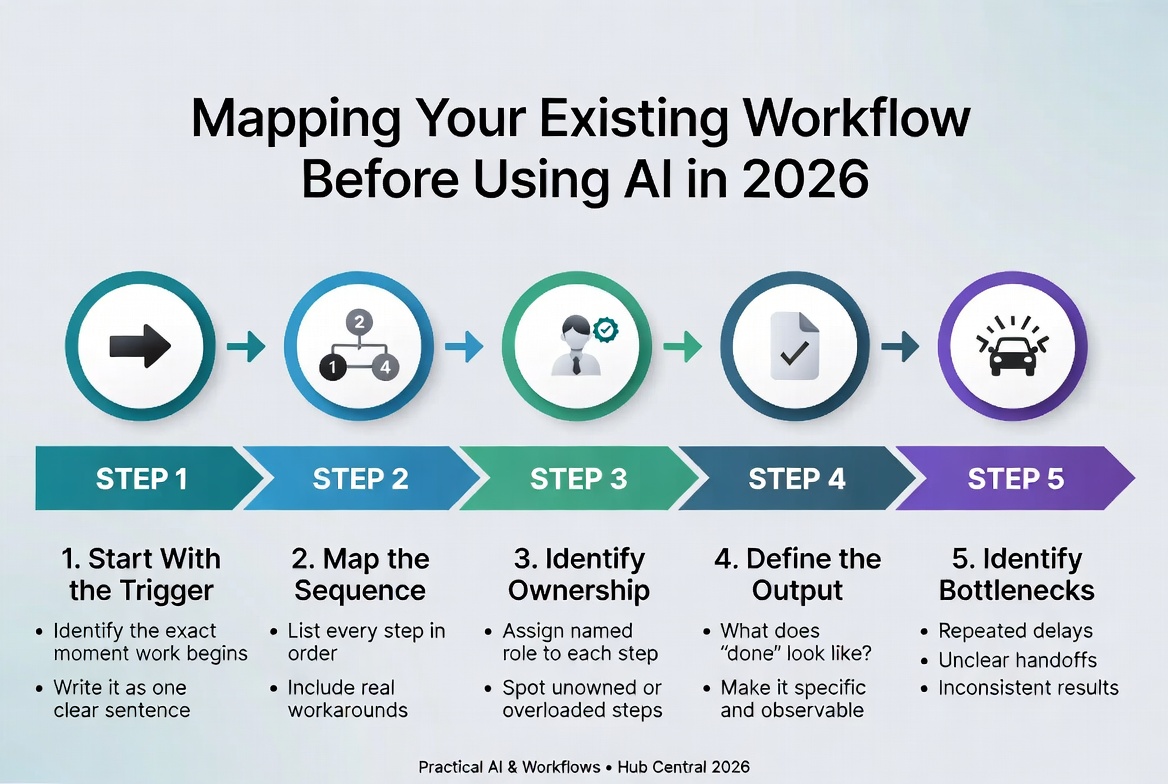
How to Map a Workflow Before Using AI | Hub Central
Learn how to map a business workflow before introducing AI, identify bottlenecks, separate automation from AI, and design human-in-the-loop processes.
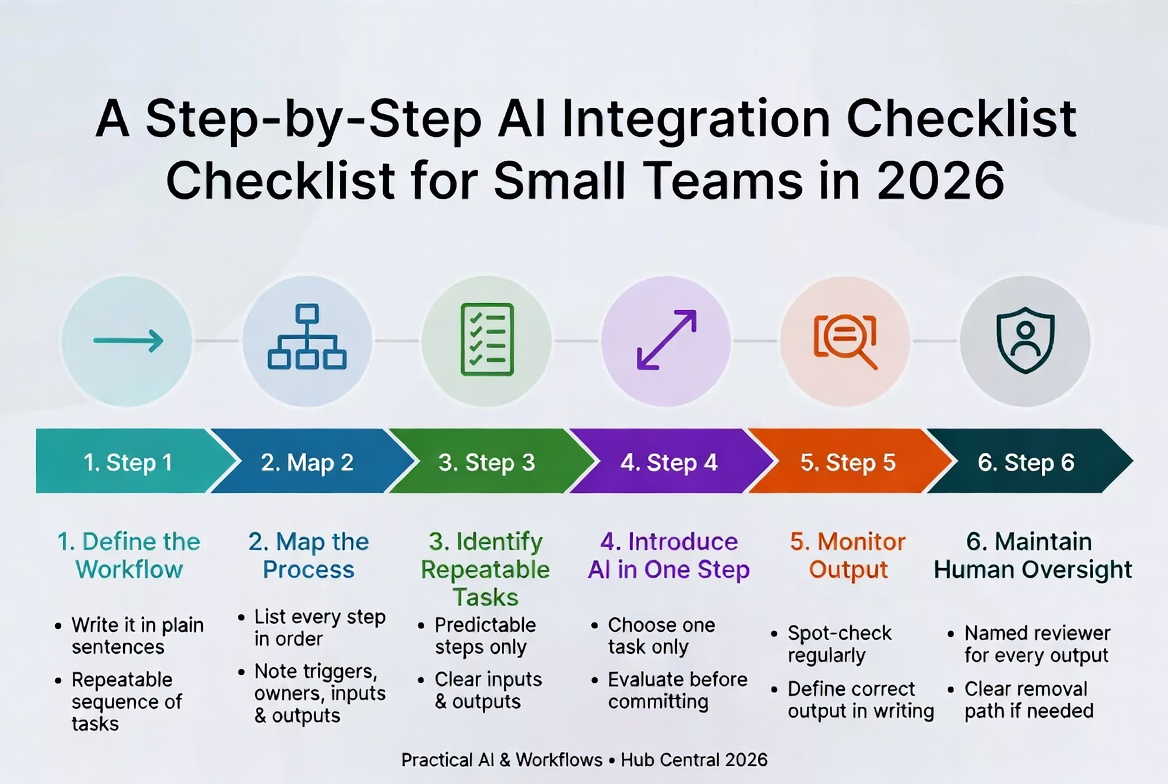
A Step-by-Step AI Integration Checklist for Small Teams in 2026
A disciplined six-step framework for adopting AI without losing control. Define the workflow first, map it, then introduce AI one step at a time – so you actually trust the results.
About Okel Dijital Team
Written by the Hub Central editorial team. We test real AI workflows and WordPress processes to help small teams work faster and smarter.